AI, Regional Languages and Smarter Bookings: Technology Set to Reshape India's Travel Industry in 2027
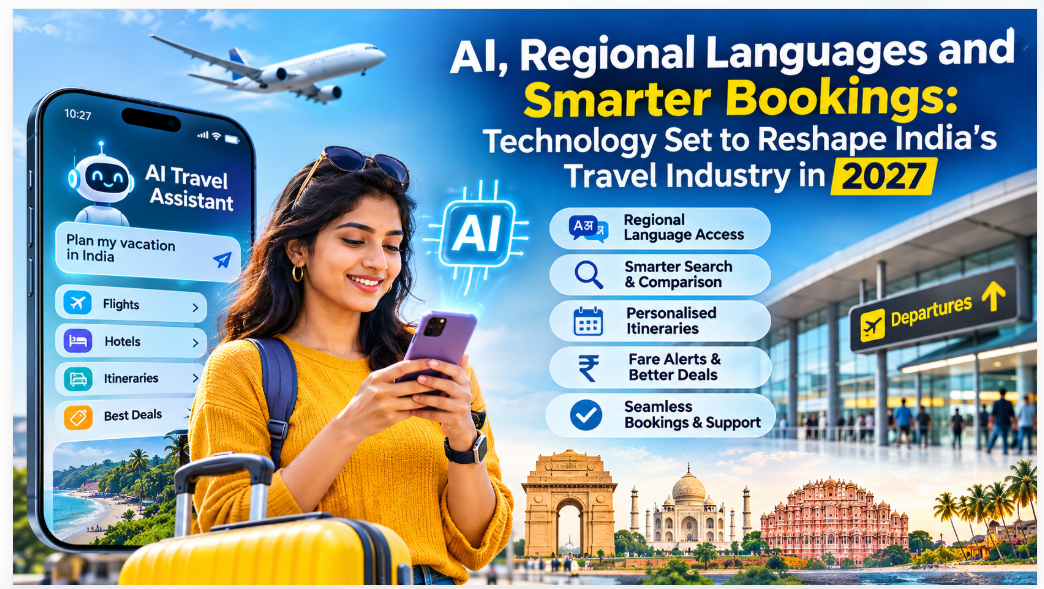
India's travel industry is entering a new phase of digital transformation, with artificial intelligence, regional-language access and changing consumer preferences expected to influence how people discover destinations, compare options and make bookings in 2027. What was traditionally a search-driven process, involving multiple websites and extensive price comparisons, is gradually moving towards more personalised and connected digital experiences.
Artificial intelligence is emerging as an important part of this shift. According to industry estimates, 82% of Indian travellers plan to use or have already used AI to plan their vacations. Further, nine out of ten internet users have interacted with applications featuring embedded AI capabilities. The growing familiarity with these tools is changing where travellers begin their research and how they evaluate travel options.
The shift is already visible in referral patterns across travel platforms. Wego is witnessing double-digit referral traffic from AI-powered systems such as ChatGPT and Gemini, indicating that an increasing number of travellers are beginning their trip-planning journeys through conversational AI rather than traditional search alone.
For the industry, this presents an opportunity to make travel discovery more intuitive. AI-powered tools can help travellers identify destinations, compare flight and hotel options, explore suitable travel dates and build itineraries based on their interests and budgets. However, the real challenge will be ensuring that these recommendations translate into accurate availability, competitive pricing and reliable bookings.
Karthik Venkataraman, Chief Revenue & Product Officer (CRPO), Vernost, believes that the next phase of travel technology will be driven by the integration of discovery, comparison and booking experiences.
"By 2027, artificial intelligence and integrated digital platforms will fundamentally reshape how Indians discover, compare and book travel. The journey will move beyond searching through multiple websites towards more conversational, personalised and seamless experiences, where travellers can communicate their preferences and receive recommendations tailored to their budgets, interests, travel history and schedules. AI-powered assistants will increasingly help travellers shortlist destinations, compare flight and hotel options, identify suitable travel windows and build itineraries in less time. Instead of navigating multiple platforms, consumers will expect a connected experience that brings discovery, comparison, booking, payments and post-booking support together."
Regional languages could open up the next phase of digital travel adoption
India's linguistic diversity is another factor that will shape the evolution of digital travel services. As online platforms reach consumers across smaller cities and towns, the ability to access information in familiar languages is becoming increasingly important.
Nearly 98% of internet users in India have accessed content in Indic languages, while 57% of urban internet users prefer consuming content in regional languages. For travel businesses, this creates an opportunity to make digital services more accessible to consumers who may otherwise find conventional booking interfaces difficult to navigate.
Regional-language interfaces and conversational assistance can simplify everything from understanding hotel facilities and cancellation policies to comparing flight schedules and planning itineraries. This could be particularly valuable for first-time flyers and travellers from emerging markets, where access to understandable and reliable travel information can influence booking decisions.
Smaller cities are becoming important contributors to travel demand
The expansion of India's aviation network is also changing the geography of travel demand. While metropolitan cities have traditionally driven a significant share of air passenger traffic, improving regional connectivity is bringing more destinations into the country's travel ecosystem.
Since 2020, overall passenger traffic in India has grown approximately 1.2 times, while several regional airports have recorded growth in multiples. The next phase of the UDAN scheme aims to enhance connectivity to 120 new destinations and enable four crore passengers to travel over the next decade.
This expansion is expected to create opportunities for airlines, hospitality businesses and online travel platforms. As more people from smaller cities gain access to air travel, the demand for destination information, affordable accommodation, route comparisons and end-to-end booking support is likely to grow.
Bernard Corraya, General Manager – India, Wego, highlights the importance of making travel discovery simpler as the market expands beyond established metropolitan centres.
"For many Indian travellers, especially those planning from smaller cities or booking their first flight, the challenge isn't a lack of options but knowing which one is right for them. AI will help make that easier, from discovering destinations in their own language to comparing fares, schedules and total trip costs in one place."
Value-conscious travellers are looking for smarter ways to compare
While travel aspirations continue to grow, affordability remains central to booking decisions. Around 76% of Indian travellers are cutting down on non-essential spending to make travel possible. This is encouraging consumers to pay closer attention to fare movements, alternative routes, travel dates and the overall cost of their trips.
On Wego, Indian travellers are increasingly relying on fare alerts and flight-tracking tools to monitor price changes, schedules and alternative routes. Such tools are becoming relevant for consumers who want to plan their trips without compromising too much on their budgets.
AI could further strengthen this behaviour by helping travellers identify suitable alternatives based on their preferences, schedules and spending limits. However, transparent pricing will remain essential. Consumers need to understand the final cost of a booking, including additional charges, baggage fees and cancellation conditions, before making a decision.
AI is moving beyond travel inspiration towards actual transactions
The influence of AI is no longer restricted to destination discovery and itinerary suggestions. It is increasingly becoming part of the booking process itself. Among Indian travellers who have used AI for travel planning, 54% have booked hotels through AI services, while 59% have booked tickets through such services.
This indicates that consumers are becoming more comfortable using AI-assisted platforms to move from exploring travel options to completing transactions. The next step will be creating connected experiences that bring discovery, booking, payments, loyalty benefits and post-booking assistance together.
For travel businesses, this will require stronger technology infrastructure. Real-time supplier integrations, unified inventory, intelligent pricing and predictive analytics can help airlines, hotels and travel platforms respond more effectively to changing demand. Automated customer support can also improve response times, particularly during peak travel periods when booking-related queries and service requirements increase.
Vernost's Venkataraman believes personalisation will become an equally important part of this evolution. Loyalty programmes, contextual offers, flexible payment options and rewards integration will increasingly influence booking decisions. Travel businesses will need to move beyond discount-led engagement and offer consumers relevant benefits based on their preferences and interactions.
Trust will remain central to technology-led travel
Despite growing AI adoption, travellers are not yet ready to hand over every decision to automated systems. Around 41% of Indian travellers trust people more than AI when making travel decisions, while only 26% consider AI more trustworthy. AI-led flight rebooking also ranks among the least preferred automated activities.
This highlights an important distinction between using technology to assist travellers and allowing it to make critical decisions independently. Consumers may be comfortable using AI to shortlist destinations, compare prices or suggest itineraries, but cancellations, refunds and flight rebookings involve financial commitments where human assistance and control remain important.
As a result, the future of travel technology will depend on how effectively businesses balance automation with transparency, data security and accessible customer support. Accurate inventory, clear pricing and reliable transaction systems will be just as important as sophisticated AI capabilities.
As India moves towards 2027, the travel industry is likely to become increasingly connected, with technology influencing every stage of the consumer journey. AI will make discovery more conversational, regional languages will widen digital access, and improved aviation connectivity will bring new traveller segments into the market. But the success of this transformation will ultimately depend on whether technology can make travel planning not just faster, but also more affordable, dependable and accessible.